
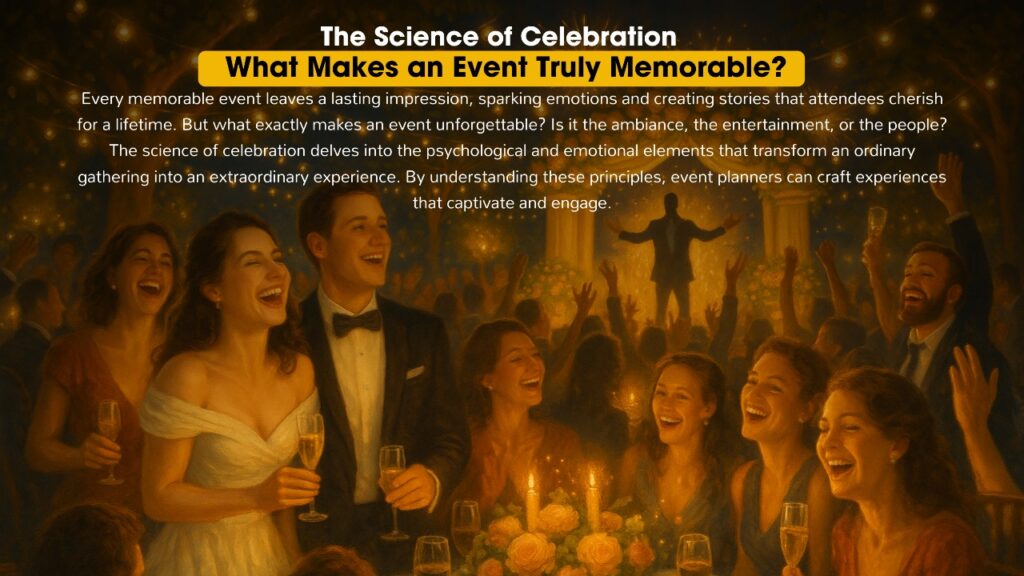
Every memorable event leaves a lasting impression, sparking emotions and creating stories that attendees cherish for a lifetime. But what exactly makes an event unforgettable? Is it the ambiance, the entertainment, or the people? The science of celebration delves into the psychological and emotional elements that transform an ordinary gathering into an extraordinary experience. By understanding these principles, event planners can craft experiences that captivate and engage.
The Power of Emotional Connection
Emotions play a crucial role in memory formation. Studies show that people remember experiences tied to strong emotions more vividly than neutral events. When an event evokes joy, excitement, or nostalgia, attendees are more likely to recall it in detail. Creating moments of surprise and delight—such as unexpected performances or heartfelt speeches—can enhance emotional engagement and leave a lasting impact.
Sensory Engagement and Atmosphere
A truly immersive event appeals to multiple senses—sight, sound, touch, taste, and smell. From visually stunning décor to carefully curated music, every element contributes to the overall atmosphere. Scents, for example, are closely linked to memory and can trigger deep emotional connections. Thoughtfully incorporating sensory experiences ensures a dynamic and engaging environment that resonates with attendees.
Personalization and Participation
Events that make guests feel special and involved are inherently more memorable. Personalized experiences, such as customized name tags, interactive activities, or tailored event swag, create a sense of belonging. Encouraging participation—through live polling, hands-on workshops, or gamified experiences—deepens engagement and fosters meaningful connections.
The Role of Storytelling
Great events tell a story, whether through a well-crafted theme, engaging speakers, or compelling visuals. Storytelling captivates audiences, making the experience more cohesive and emotionally impactful. A strong narrative structure guides attendees through the event, ensuring that each element—decor, performances, and speeches—contributes to a unified and memorable journey.
The Psychological Impact of Surprise and Novelty
People are naturally drawn to the unexpected. Novelty sparks curiosity, activates the brain’s reward system, and enhances memory retention. Incorporating unique elements—such as an unexpected celebrity appearance, a themed interactive installation, or an unconventional entertainment act—can make an event stand out. Surprises create moments of awe that attendees will talk about long after the event concludes.
CONCLUSION
Creating a truly memorable event is both an art and a science. By understanding the psychological and emotional factors that enhance experiences, event planners can design celebrations that leave a lasting imprint. From emotional connections and sensory engagement to storytelling and novelty, every detail contributes to crafting unforgettable moments. When planned with intention, an event becomes more than just a gathering—it becomes a cherished memory that endures over time.